

Your Guide to Beating Jet Lag and Enjoying Paris with Kids
Written by Brittany Britten, Founder of Mimu & Me, with input from Dr. Calli Studebaker our amazing pediatric occupational therapist!
Before our trip, I worried that Paris might feel too busy, too crowded, or too focused on museums and sightseeing to truly enjoy as a family. But what we found was a city full of little moments that felt surprisingly magical through our children's eyes. If you're searching for things to do in Paris with kids, this guide highlights easy wins and low-stress experiences.
Yes, there are iconic landmarks" The Eiffel Tower really is as impressive as everyone says, the pastries are every bit as delicious, and seeing the city sparkle at night feels like stepping into a movie!
But my absolute favorite memories are the simple moments: sharing a crêpe in a park, watching our kids race toward a carousel, wandering charming streets with no agenda other than seeing where they led, taking breaks at playgrounds, or sitting at cafés while our children played and snacked beside us.
Paris isn't a destination you need to "survive" with kids; it can be genuinely enjoyable with kids!
This guide includes our favourite family-friendly activities, practical tips that made our trip easier, and a few things I wish I'd known before we arrived. My hope is that it helps you feel a little more confident planning your own Paris adventure and reminds you that you don't have to wait until your children are older to experience incredible places together. You'll also find simple jet lag tips for kids so your arrival days feel calmer.
Before You Go
Things That Made Paris Easier With Kids
Things to Do Before Your Trip
- Book the big things early: Eiffel Tower, Seine cruise, and any must-do restaurants.
- Download an offline map and save a few playgrounds, cafés, and restaurants near your hotel.
- Talk through the “hard parts” before you go: airport security, passport lines, elevators, jet lag.
- Plan one anchor activity per day, not five.
- Make a loose food plan for tired moments.
Things I'd Pack (or Buy Before You Go):
- Lightweight stroller, even if your child barely uses one at home.
- Familiar snacks with protein.
- Small activities for lines, cafés, and airport waits.
- Portable charger.
- Comfortable shoes for everyone.
- eSIM card for France to have data, WhatsApp & messaging wherever you are (use code BRITTA4984 to save $4.50 CAD!)

Pack snacks with protein, a small fidget, sticker books, and even ice water. Playing I-spy, having something to look forward to when they are done waiting, and positive affirmations "I love how patient you are being," "I love how your body is keeping to itself," or "My body feels tired too" are helpful to practice before you go.

Preparing Your Child
The trip goes better when Paris isn’t a surprise. This sounds obvious, but most travel preparation with kids focuses on logistics: what to pack, where to stay, which museums to book. Emotional preparation is different. It’s about making sure the hard moments don’t arrive as surprises.
Before Paris, talk through:
- Airport security: bags on the belt, bodies through the scanner, beeps are normal.
- Passport control: the line may be long, and that doesn’t mean anything is wrong.
- The Eiffel Tower: big crowds, scanners, small elevators, big views.
- Jet lag: their body clock may feel confused, and that’s not their fault.
OT Tip from Dr. Calli: Preparation is regulation. Practice new experiences before the real event happens.
Use play, books, visuals, or pretend scenarios. These tools make unfamiliar experiences feel safer.
This matters for sensitive, anxious, or routine-oriented children. Previewing the plan can lower stress and build flexibility.
Sometimes the best regulation strategy is helping a child feel prepared.

Books to Read Before You Travel
We LOVE to read books about places we are visiting. It's another great way to help your child feel prepared, but it also builds excitement!
The Kids Who Travel the World: Paris — Read this one first. It builds genuine excitement for what’s coming and gives kids a framework for the adventure ahead. Pairs with Lila the Fox: pure curiosity and the joy of discovering somewhere new.
Babar’s Guide to Paris — The classic preparation book. Babar knows Paris and now your child will too — the landmarks, the neighbourhoods, what to expect. Pairs with Ollie the Owl: calm, prepared, the one who’s been before and knows it’s going to be wonderful.
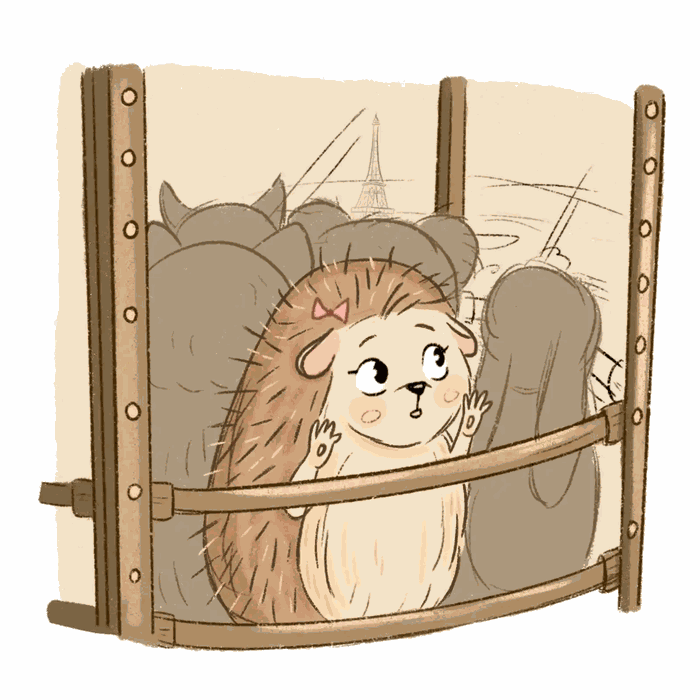
Mishi & Mashi Go to France — For the child who is uncertain about the newness of it all. Navigating somewhere unfamiliar, feeling wobbly, and finding your footing anyway. Pairs with Hazel the Hedgehog — this one is specifically for your Hazel child.
Lily & Baa in Paris — For the child who is already so excited they can barely sit still. Meets that energy and channels it beautifully into the adventure. Pairs with Pip the Squirrel, obviously!

Download your free Paris Activity Book before you leave! Our Paris Activity Book includes simple tools for before and during the trip. You’ll find CDG airport bingo, useful French phrases, a pre-trip drawing page, and Calm Crew Paris coloring pages.
Getting There: The Airport, The Flight, and Arriving in One Piece
Most direct flights from Canadian cities like Calgary, Toronto, Montreal, and Halifax arrive in Paris late morning or early afternoon. In theory, this is great. You land with a full day ahead of you. In practice, everyone may also be tired, disoriented, hungry, and operating on very little sleep.
Both can be true.
The Flight
An overnight flight is its own kind of parenting math. Your child might sleep for hours. They might barely sleep at all.
Plan for both. That mindset helps more than hoping the plane will magically do the work.
A small calm kit or activity bag makes a real difference. It gives your child something familiar when the flight starts to feel long.
From our current collection, the Travel Bag offers a tray-table play space and visual routine cards, while Calm Links provide a small building activity for children ages 3+.
Arriving at CDG
Passport control at Charles de Gaulle can be hard with tired kids. On our last trip, the line was long. Everyone was exhausted.
Prepare your child for this part before you go. Explain that there may be another wait after landing.
A simple script: “We landed in France. Now we wait so someone can check our passports. Then we get our bags and go to the hotel.”
Solo parent note: bring a notarized permission letter from your partner, just in case.
Arrival Day: Do Less Than You Think
Here is the honest truth: do not try to do Paris on arrival day.
Just do the neighbourhood.
We checked in and walked to Luxembourg Gardens. Not the Eiffel Tower. Not a museum. Just a playground, fifteen minutes from the hotel.
It was the right call. The kids could run. We could sit. Everyone’s body had time to catch up.
Find a playground. Get snacks. Walk a little. The city will still be there tomorrow.
That’s a lot.
Sensory tools can help because they give the body organized input during dysregulating moments. Pulling, squeezing, chewing, pushing, and fidgeting can all help children stay more regulated while they wait.
It also helps to avoid vague time language like “soon” or “almost there” if the wait may still be long. Try concrete language instead:
“We still have a lot of waiting left. Then we’ll show our passports. Then we’ll get our bags. Then we’ll go to the hotel.”
Family-Friendly Hotels in Paris
Hotels in Paris We’d Actually Book These Again!
Plan for that before you go. Young kids often need space to decompress after a long day.
For families, we love the 5th and 6th arrondissements. You are close to Luxembourg Gardens and slightly removed from the busiest tourist areas.
Hôtel des Mines
Best for: Families who want a quieter, practical base near Luxembourg Gardens.
Why we liked it: It’s in a genuinely calmer pocket of the 5th, close enough to walk to the gardens, and they accommodate families well. Rooms that fit four, cots and cribs available on request, and warm service that really stood out. At Easter, they gave our kids little treats without being asked, which is a small thing that made a real impression.
Know before you go: Ask about cot or crib availability when you book, not when you arrive. They were also able to store our luggage and stroller, which made a big difference.
Hôtel Louis II
Best for: Families who want more space and are comfortable spending a little more.
Why we liked it: The suite was spacious, the location was excellent, and the extra room mattered enormously at the end of long sightseeing days. When you have small children, a bit of space to reset is not a luxury. It changes the whole rhythm of the trip.
Know before you go: It’s a step up in price from Hôtel des Mines, but if the budget allows, the suite configuration is worth considering.
Hôtel des Grandes Écoles
Best for: Families who want charm, a courtyard garden, and a quieter Paris feel.
Why it’s on our list: It has family rooms, a hidden garden, and the kind of reputation that makes it sell out quickly. It was already booked when I tried to reserve it for our last trip, and I’m still thinking about it.
Know before you go: Book this one the moment your dates are confirmed.

Hôtel des Mines stored our luggage before a Saint-Malo overnight, and it was handled easily. Many Paris hotels will do the same.
They also kept our stroller at reception, so we did not have to haul it upstairs. The metro connection was easy. Getting to the Eiffel Tower and Trocadéro area also felt straightforward.
Get Outside: Parks, Playgrounds, and Room to Run
The parks are beautiful, the playgrounds are genuinely good, and some of our favourite memories came from simply letting our kids run, climb, wander, and notice things. Budget more time for outdoor breaks than you think you'll need!
Luxembourg Gardens
Best for: Your first full day, jet lag recovery, and a picnic you'll talk about forever!
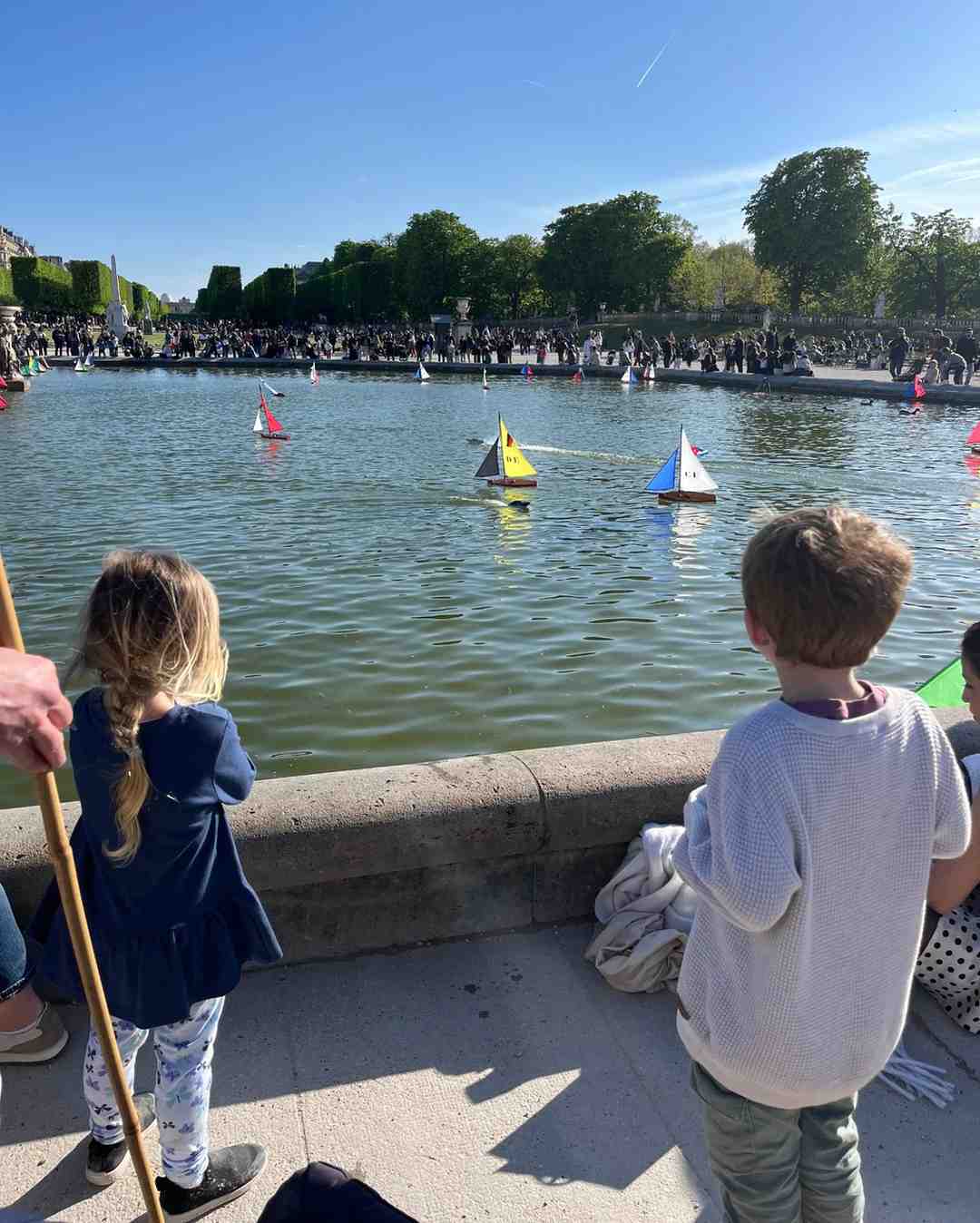
This is probably our favourite place in Paris with kids! The paid playground is excellent and worth the small entry fee, but the real magic is the model sailboat pond.
For a few euros, you rent a wooden sailboat and a stick, and your child spends the next half hour nudging it across the water and losing their mind with joy every time the wind catches it.
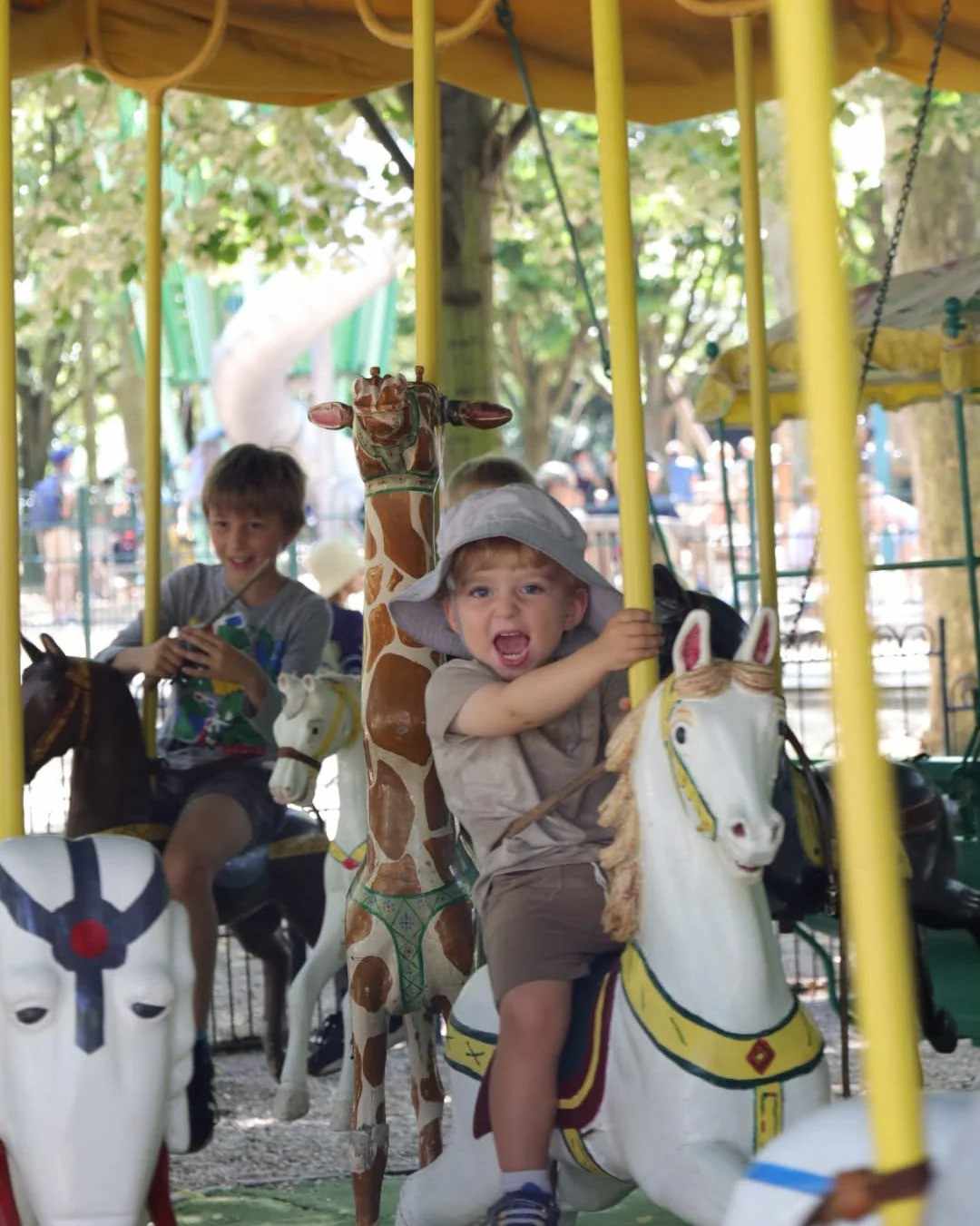
There is also a carousel, puppet theatre, chairs, and space to slow down and just enjoy Paris!
Jardin des Tuileries
Best for:
A sightseeing reset near major attractions.
This is a great place to spend an hour or two. In winter, there is a Christmas market with rides. In summer, there is a carnival.
The northwest corner has a good climbing playground. There is also a carousel and trampolines. Bring euros, bring snacks, and let everyone stop trying so hard.
Square Paul Langevin
Best for: A quiet playground-and-coffee morning.
This one barely makes the tourist maps, which is why we loved it. There is a neighbourhood playground, Noir coffee across the street, and a bakery nearby.
We found it in December and stayed for two hours. I came back with the kids in April, and it was full of cherry blossoms.
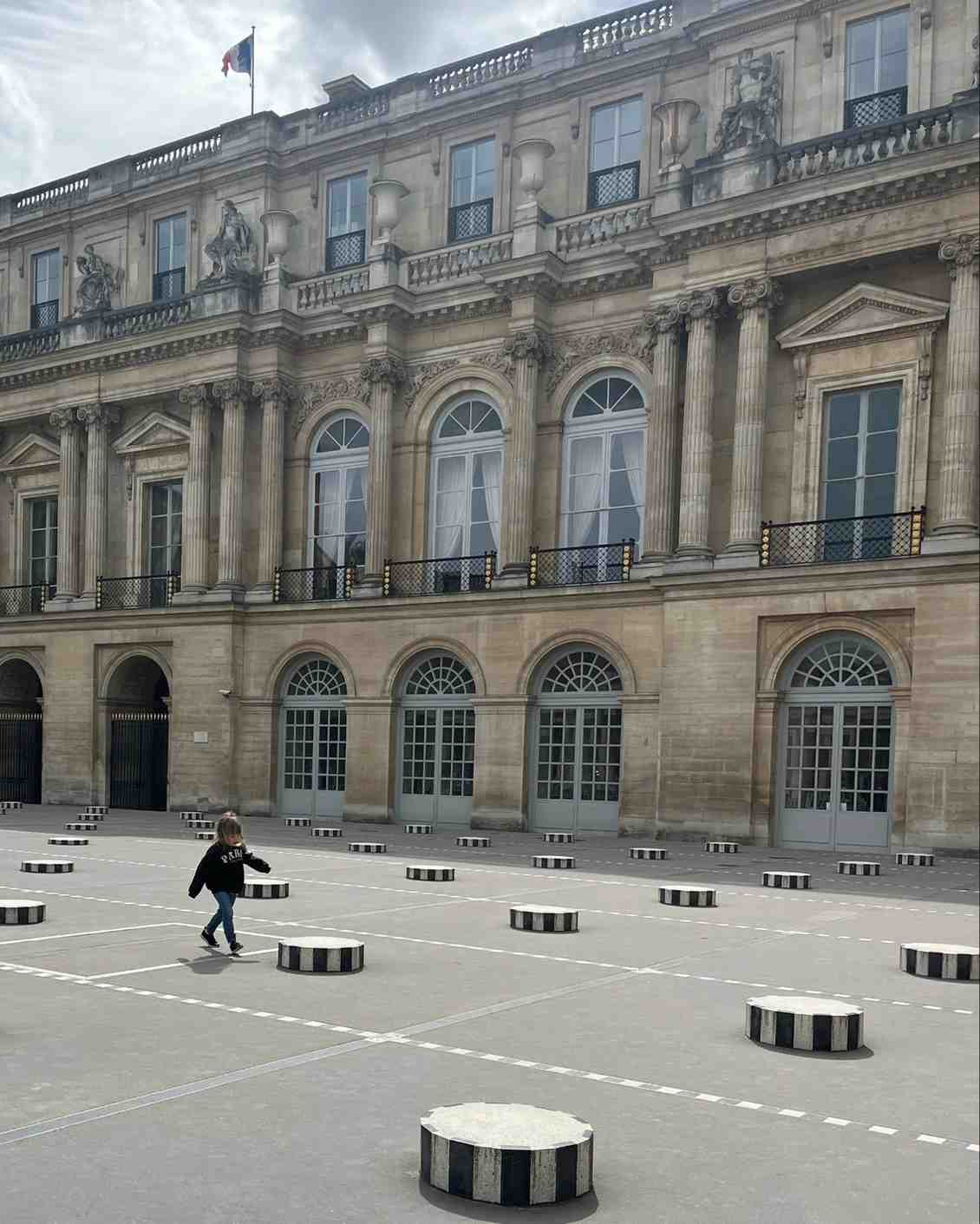
Palais Royal
Best for: Free play, pretty photos, and an easy stop.
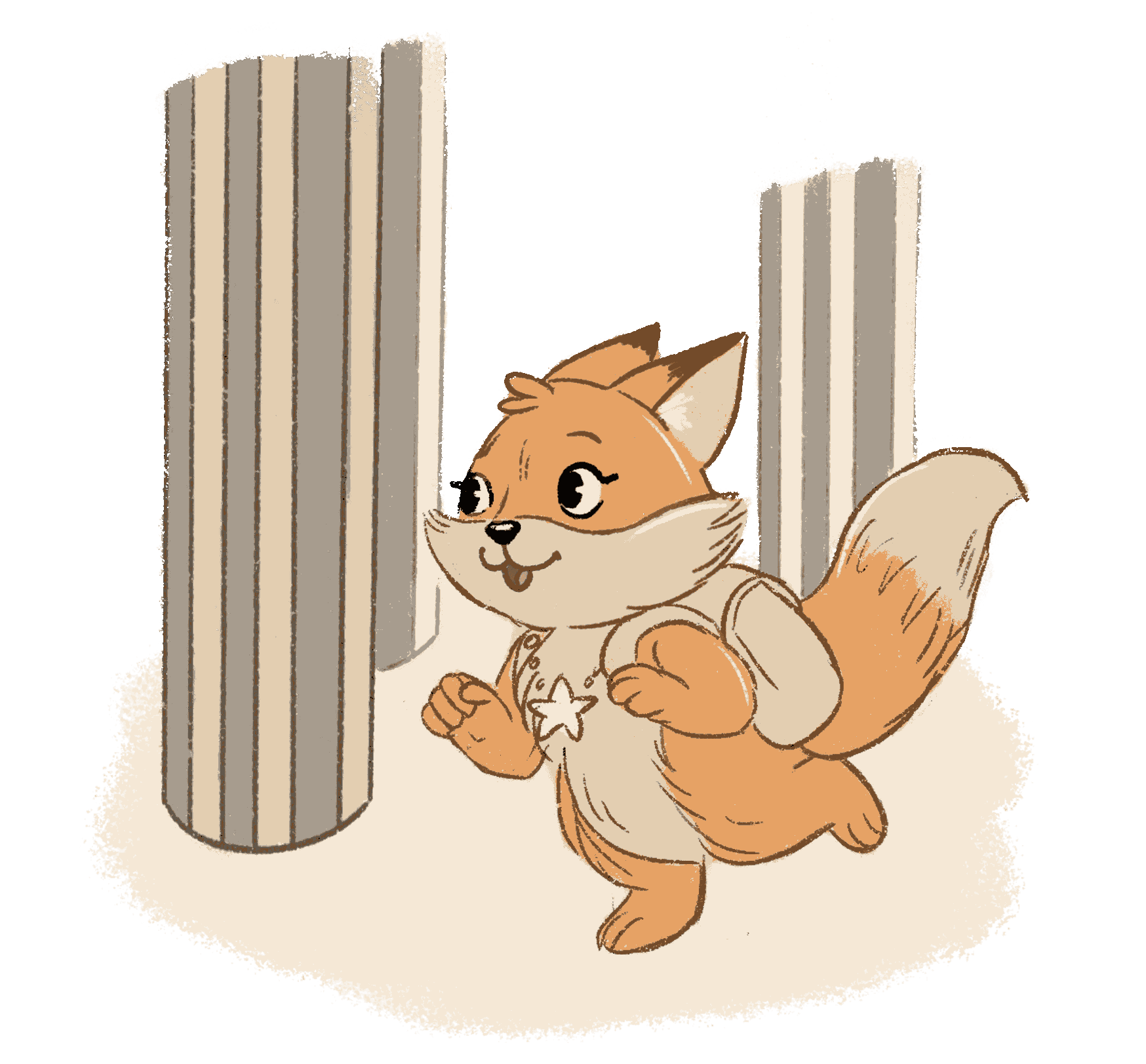
Let them run. The striped columns are irresistible for kids.
They can jump, climb, hide, and turn the whole place into a game. Go in the late afternoon if you can. The light is beautiful.
Centr’Halles Park, Les Halles
Best for: Burning energy in the middle of a sightseeing day.
There are two playground areas here. One is paid and better for older kids. The free climbing area worked well for our younger kids.
There are plenty of food options nearby too.
Saint-Séverin Church Playground
Best for: A tiny Paris discovery for younger kids.
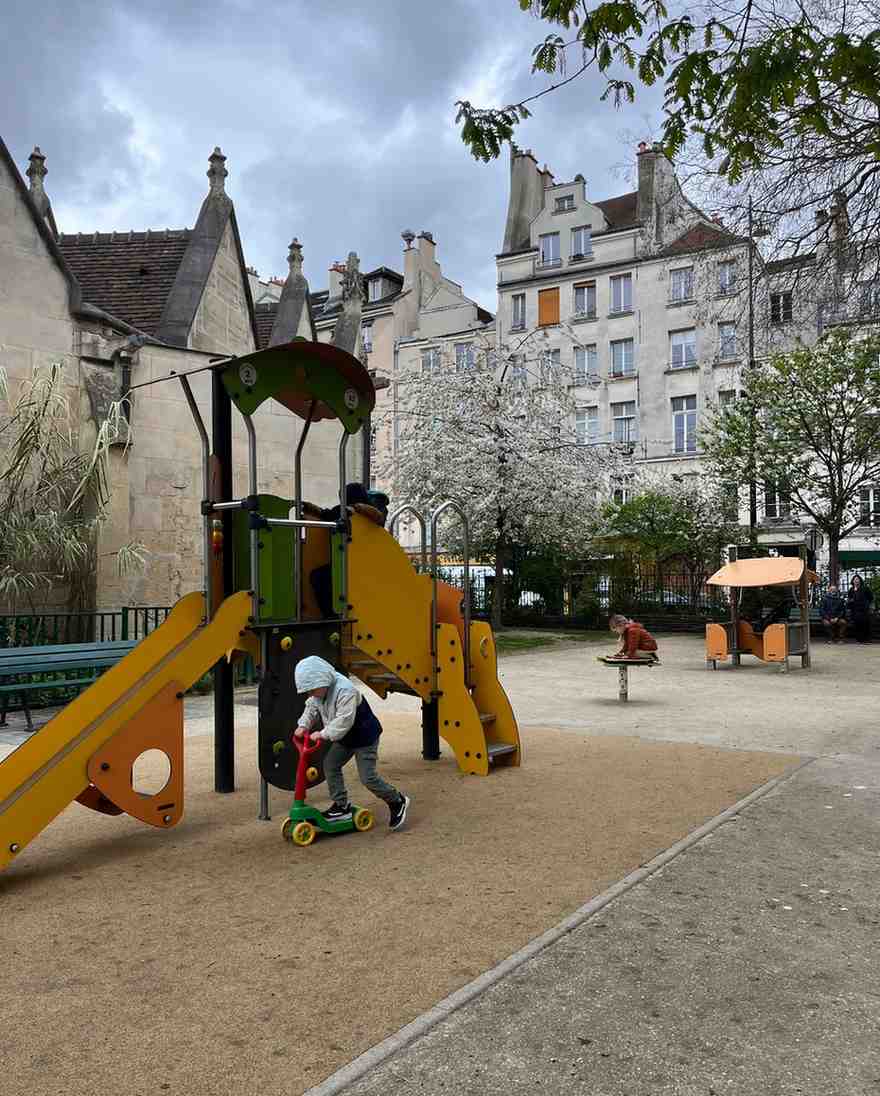
The little playground beside the church has tiny free scooters. Our kids loved them.
The church is stunning and free to enter. Pop in for five quiet minutes, then let the kids scoot outside.
This is why pulling, stretching, squeezing, climbing, pushing, or carrying heavy objects can be so organizing for children. During travel, where movement is restricted and sensory demands are high, small regulation tools can make a surprisingly big difference in helping children maintain emotional balance.

Where to Eat: Family-Friendly Restaurants in Paris
Restaurants Our Kids Actually Sat Through
Everything else is manageable.
These are the places we’ve actually been with kids and would happily go back to.
Book restaurant reservations with The Fork links below and earn points towards free meals! Use code 0F6BDA92 to earn!
Francette
Best for: Eiffel Tower views without standing in another crowd.
This was our favourite dinner of the trip. I recommend it to almost every family going to Paris.
The rooftop terrace has a direct Eiffel Tower view, so book a table there as soon as your dates are confirmed. We were rained out and had to eat inside, but the staff were genuinely gracious.
Tip: Book early. Book the terrace. This one fills up.
Make a Reservation
Les Fondus de la Raclette Paris
Best for: A fun dinner kids will actually care about.
This is the dinner our kids and my parents still talk about. It is an Alps-themed restaurant with electric raclettes built into the tables.
You melt cheese, cook meat, and build your own meal right at the table. The kids were completely absorbed.
It is not fancy. It is genuinely fun.
Make a Reservation
Also consider: Pain Vin Fromages in Le Marais.
Les Patios
Best for: A relaxed patio dinner that feels very Paris.
This restaurant sits in a square with views of Chapelle Saint-Ursule de la Sorbonne. The kids played in the courtyard while we had drinks outside.
I had the best chicken cordon bleu of my life. We ordered another drink because nobody wanted to leave.
A. Lacroix Patisserie
Best for: A short pause with a Notre Dame view.
Order something beautiful. Rest your feet. Let the kids watch the cathedral while you drink your coffee.
Bouillon Racine
Best for: A beautiful room that still feels family-friendly.
The Art Nouveau interior is worth the visit. The food is good, and the pricing is reasonable for the setting.
Make a Reservation
Brasserie des Prés
Best for: A patio drink or early evening reset.
This is a reliable option on a sweet tucked-away street. It works well when you want the feeling of eating outside in Paris without making dinner too intense.
Know before you go: Dinner starts at 7:00 PM. It may work better for lunch, drinks, or a late afternoon stop.
Make a Reservation

BONUS: Noir has toy espresso machines for kids to play with while you enjoy a good coffee!
The Noir location near Square Paul Langevin is perfect for a playground-and-coffee morning.
Terres de Café Saint-Germain-des-Prés is another hidden gem. They change their roasts often and serve truly excellent coffee.
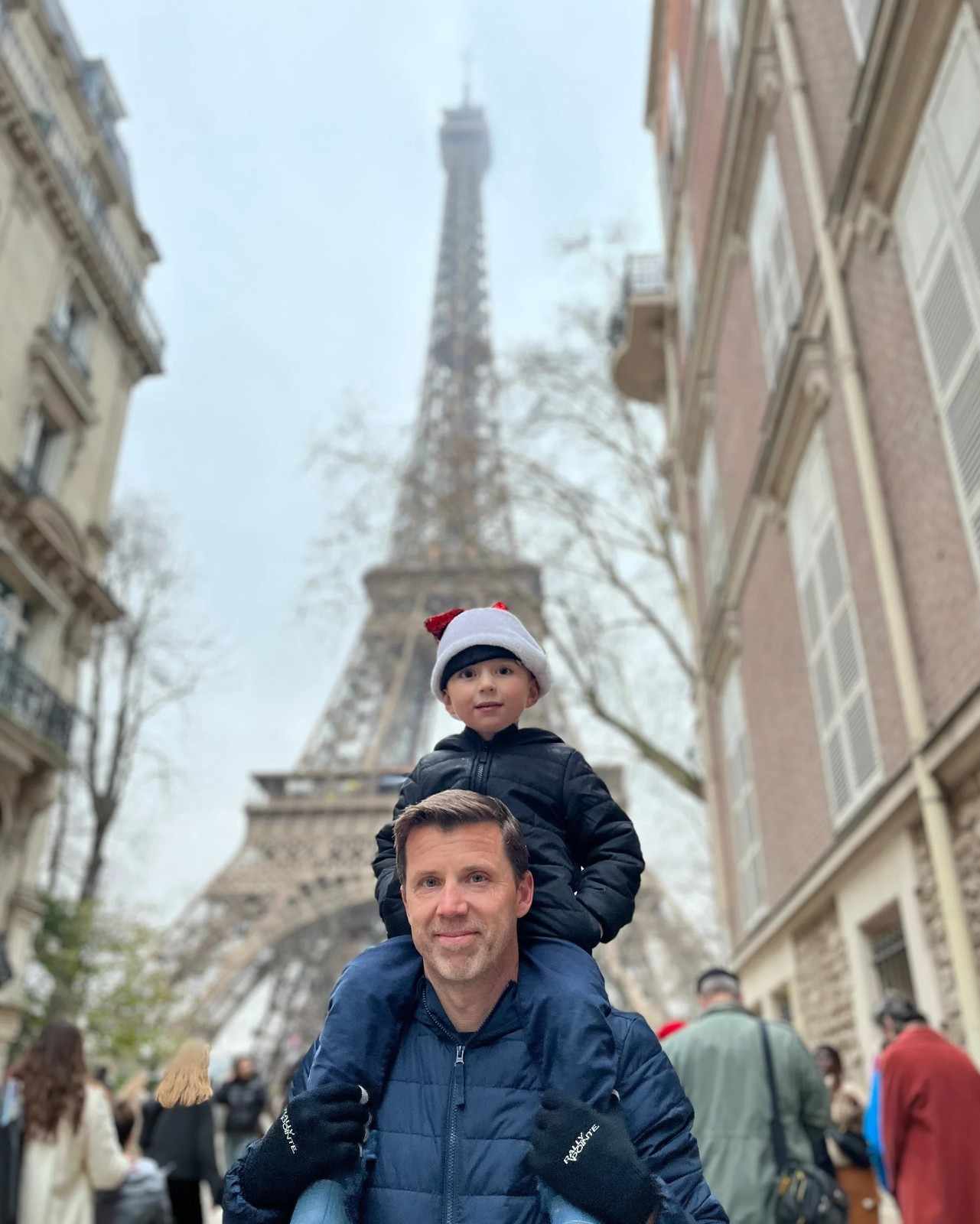
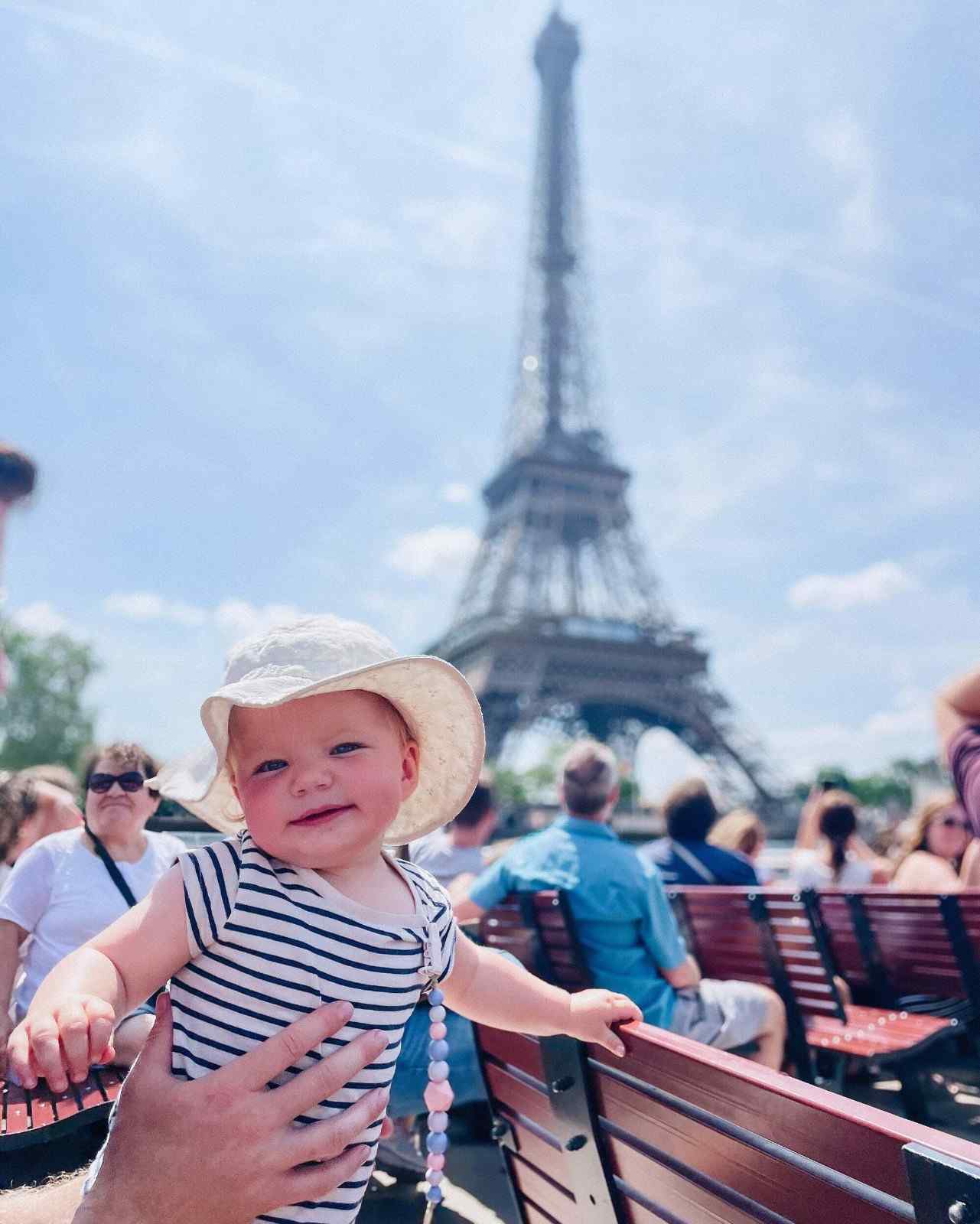
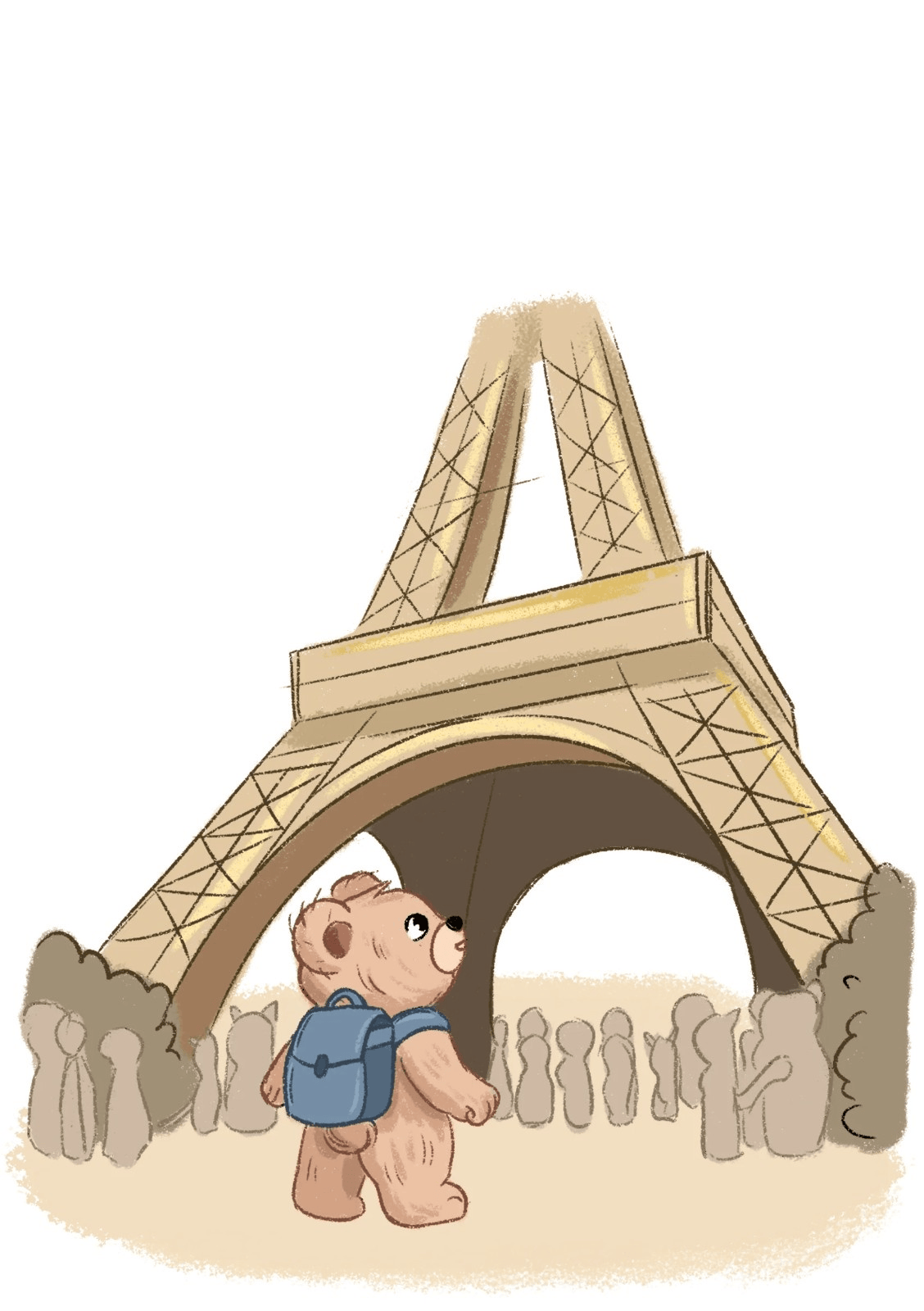
The Eiffel Tower with Kids: What to Actually Expect
Go. But go prepared, because this is one of the highest sensory-load experiences Paris offers.
Getting Tickets
Book as early as you can (60 days ahead). If you want the summit, you’ll need to be especially organized in peak season.
If summit tickets are difficult to get, don’t panic. The second floor is still an incredible experience with kids and often gives you more flexibility.
If you miss the booking window entirely, skip-the-line options through tour operators may be worth the extra cost when you're travelling with small children.
Skip the Line Tickets
The Security Queue
There are security scanners to enter the Eiffel Tower grounds, not just to go up the tower.
Prepare your child for this separately from airport security. Bags go through a scanner, bodies go through a scanner, and there may be a line. Same process, new context.
Tell them before you arrive.
The Elevator
The elevator is small, glass-sided, full of strangers, and moving.
For children who are sensitive to enclosed spaces, heights, or crowds, this may be the hardest part. Talk about it ahead of time. Show them videos if that helps. Give them a simple job, like holding the ticket, spotting the Seine, or counting elevators.
A job gives kids something to focus on when the experience feels big.
At the Top
The summit gets crowded, and somehow children are much better than adults at wiggling their way to the railing.
Pack an extra layer in winter. Expect heat and crowds in summer. And once you’re up there, slow down enough to let them take it in.
The view really does live up to the hype, and your children will know it even if they can’t explain it yet.
If your child doesn't enjoy large crowds, heights, or small spaces, prepare them ahead of time. Show videos. Talk through each step. Sometimes knowing “it might feel squishy and loud for a few minutes” is enough to reduce fear. Giving kids a simple job - holding the ticket, spotting the Seine, counting elevators - can also help them feel grounded and involved.

Find a spot with a clear view at dusk and wait for the sparkle. In December, we watched it from the Christmas market at the base with truffle fondue, mulled wine, and two completely transfixed kids. In late March, it happened around bedtime. In summer, it may be too late for younger children, but even a glimpse from a restaurant terrace counts.
Don’t miss it!

The Picnic
Rue Mouffetard to Luxembourg Gardens
This is the afternoon we would do on every Paris trip.
The route:
Start on Rue Mouffetard in the 5th arrondissement. It feels like the Paris of a film: narrow, cobbled, busy, fragrant, and alive.
Walk slowly. Let the kids look at everything.
What to buy:
Stop at Fromagerie Androuet for cheese. Pick up a baguette from Boulangerie Guyot Ferreira. Add fruit, olives, charcuterie, something sweet, or a bottle of wine.
Then stop near Luxembourg Gardens for macarons. Let the kids choose one each. They will carry them like treasure.
Where to go:
Walk to Luxembourg Gardens, find a spot, and eat everything.
Our kids ate better from a picnic blanket than they did in most restaurants. Maybe it was the fresh air. Maybe it was the fact that they chose part of the picnic themselves.
Whatever it was, it worked. Do this. Don’t skip it for another restaurant.
OT Tip from Dr. Calli: Dysregulation can look like whining, silliness, clinginess, meltdowns, or hyperactivity. Build in rest breaks during the first few days. Keep plans light. Low-stakes experiences, like a picnic, can help everyone reset.
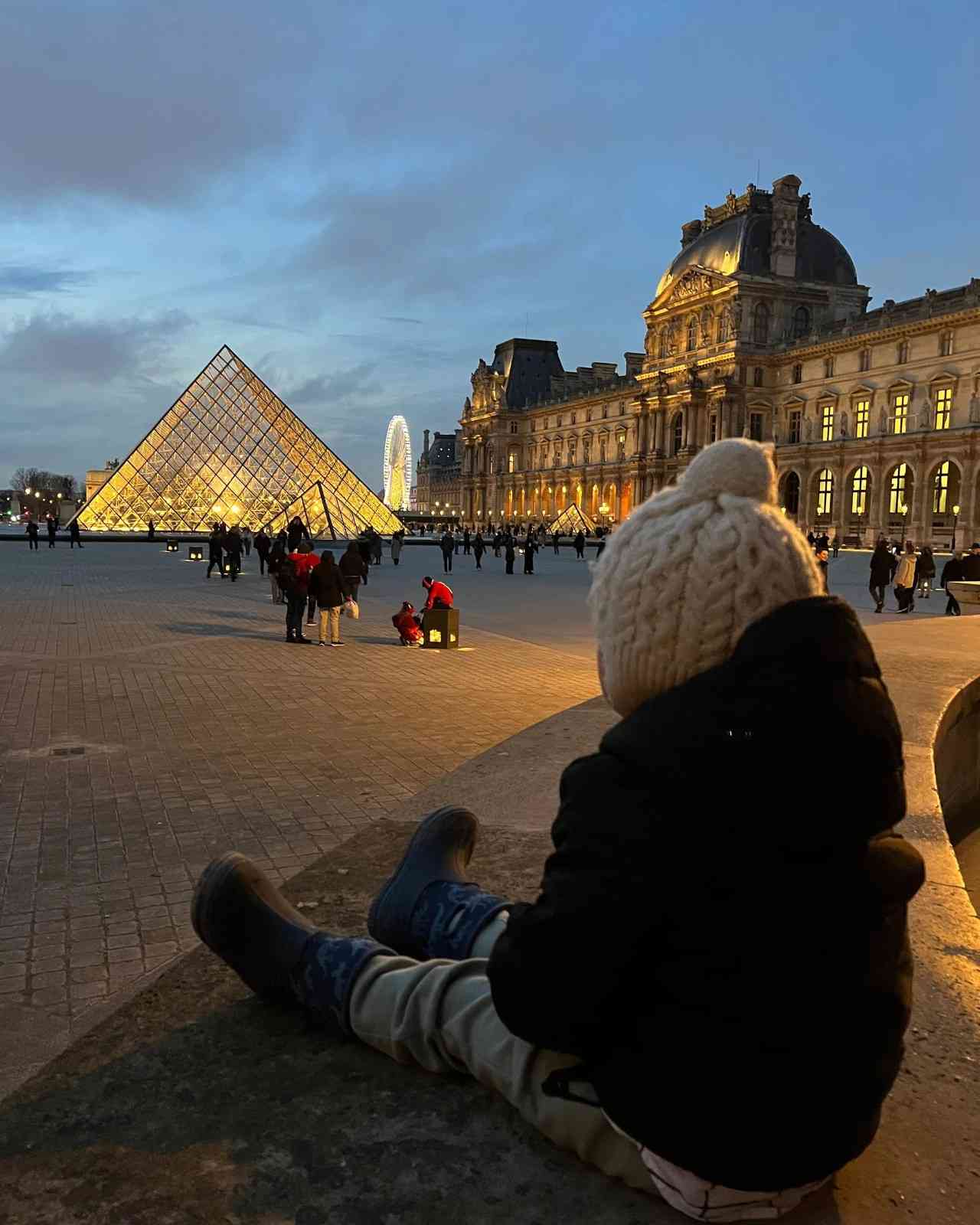

See Something Else: Museums and Landmarks Worth the Effort in Paris with Kids
Skip the inside of the Louvre.
Musée d’Orsay
Best for: A first Paris museum with young kids.
It's a manageable size, the building itself is stunning, and the Impressionist collection gives kids something immediate to respond to: colour, light, people, movement, and familiar scenes.
We have visited twice with our kids. One visit went beautifully. The second ended sooner, which is normal.
Know before you go: Some upper-level areas have awkward stair configurations with a stroller, and crowded exhibits can become overwhelming quickly. If you feel everyone starting to unravel, move on.
Église Saint-Sulpice and Église Saint-Séverin
Best for:
A free, beautiful, low-pressure stop. Both churches are stunning, free to enter, and manageable with children because the scale and light do the work for you.
Five minutes inside is enough to make an impression. Pop in, look up, and come back out.
Paris’s churches are some of its most underrated family-friendly spaces.
Prepare your child before you walk through the door: tell them what they'll see, what the rules are, and agree on a signal they can give you when they've had enough.
Leaving early because your child asked to is not failure. It's co-regulation working exactly as it should.

The Seine Cruise
An Hour on the Water Worth More Than Two More Hours Walking!
A Seine cruise can be a true reset for kids who have walked, waited, and looked at things all day.
It is contained. It moves. It gives everyone a seat. Paris slides past from the water, and nobody has to work very hard.
We booked the pirate picnic option for the kids. They each got a cute snack box with a postcard, donuts, juice, and treats. They loved opening it.
Honest note: I would book the children’s pirate box again. I would skip the full picnic for everyone else.
Booking Tip: We much prefer departing from Pont Neuf and taking Vedettes du Pont Neuf over other cruise options we’ve tried. Book in advance, go in the late afternoon if you can, and let this be one of the gentler hours of the trip.
Book the cruise here.
Getting Around: Navigating Paris with Little Ones
The 5th and 6th arrondissements are well connected. We took the metro from the Eiffel Tower and Trocadéro area back toward Hôtel des Mines without trouble.
The Stroller Situation
Paris pavements are uneven. Metro access varies. Some beautiful streets are cobblestoned and hard with wheels.
A compact travel stroller is worth it.
ErgoBaby Metro+
We have travelled with the Ergobaby Metro for more than three years. On this trip, we added a Hoppie attachment for our 3-year-old.
It clips onto the stroller and gives a second child a small standing platform. It was one of our best decisions. She loved it.
Hoppie
There is a learning curve, mostly with the brake.
On the way to Ladurée, my daughter pressed the brake five times in three blocks. I gave an ultimatum I was not proud of. She stopped. We got macarons. They were worth it.
The Hard Moments
What gets tricky, and what actually helps
Dr. Calli breaks down some specific situations you might come across in Paris.
Challenges:
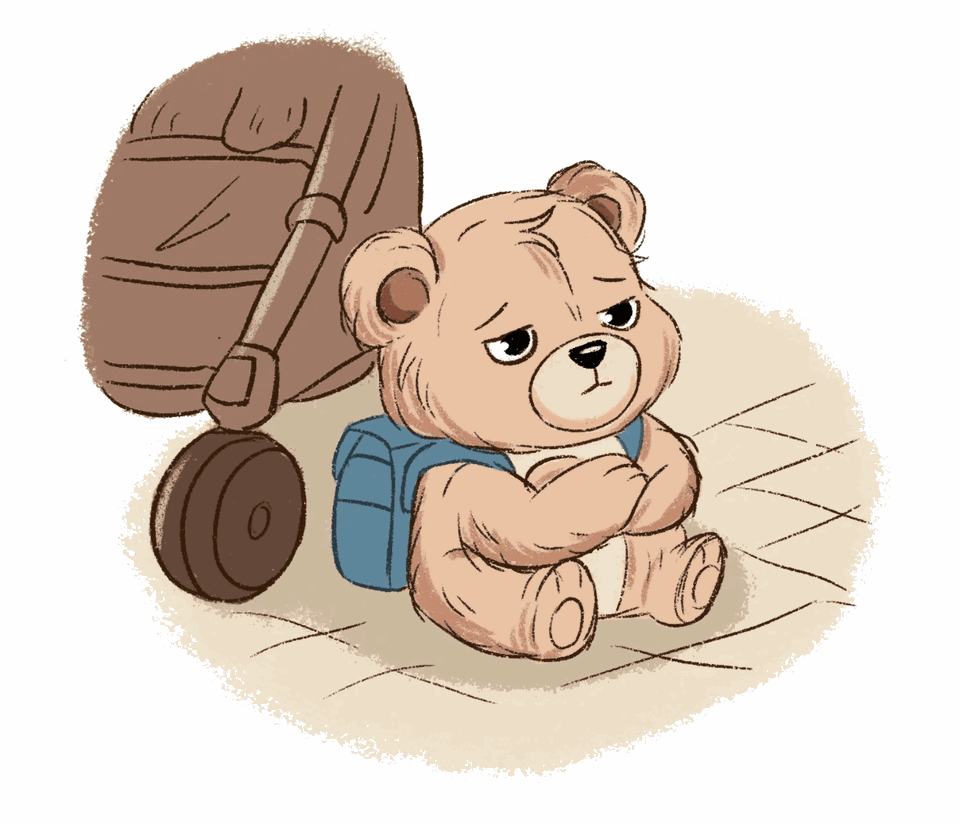
- Waiting in crowded spaces is incredibly demanding for young nervous systems. Children are being asked to stand still, tolerate noise and close proximity, manage excitement, and cope with uncertainty all at once. That’s a lot.
- Children reach sensory saturation faster than adults, especially in visually crowded, noisy, or highly stimulating environments like museums. Once a child’s nervous system moves into overwhelm, pushing through often makes the experience harder for everyone.
What Can Help:
- Sensory tools can help because they give the body organized input during dysregulating moments. Pulling, squeezing, chewing, pushing, and fidgeting can help children stay more regulated while they wait. But emotional co-regulation matters just as much. Calm, confident language helps children borrow regulation from the adults around them.
- It also helps to avoid vague time language like “soon” or “almost there” if the wait may still be long. Young children experience time differently than adults. Concrete language feels safer: “We still have a lot of waiting left, then we’ll go through security, then we’ll see the tower.”
Visual routines also create a sense of safety. When children can see what’s happening next, their nervous systems often stay calmer and more flexible. Independence increases too - children are more likely to participate successfully when the environment itself is organized in a clear and accessible way.

Jet Lag Tips for Kids
Jet Lag is Real and Day Two Is the Hardest
We arrived on a direct flight from Calgary around noon. The passport line was long. Everyone was exhausted.
The kids had barely slept on the plane. We still pushed through arrival day with a Luxembourg Gardens playground visit and a stroller walk. Fresh air and movement helped more than a dark room.
Then my 3-year-old woke up at 2am and stayed awake for three hours.
I also forgot to set an alarm. We woke up at 1pm the next day. I was so frustrated with myself.
The afternoon was slow and grumpy until we found a playground. Once the kids ran, they were fine.
My daughter had middle-of-the-night wake-ups for four nights. This is normal. This is jet lag. It is not a reflection of your parenting.
What I’d do differently:
- Set multiple alarms for day two.
- Treat the first two days as recovery days.
- Plan good moments, not full Paris days.
- Add playgrounds and movement generously.
OT Tip from Dr. Calli: Use morning light, daytime movement, hydration, protein snacks, and a familiar bedtime routine. Climbing, running, and stroller walks can help children organize their bodies after a long flight.
Your child’s body clock is disrupted. Their body is trying to recalibrate.
Morning light, daytime movement, and a familiar bedtime routine help most.

Our Favorite Things to do in Paris with Kids
Some of our favorite memories from our time in Paris:
- Dinner at Francette. We were supposed to be on the rooftop terrace with the Eiffel Tower directly in front of us, and it rained. They brought us upstairs anyway for drinks while we waited, so we got the view in the golden hour light before retreating inside for dinner. The food was excellent. The kids were charming. Paris was doing what Paris does when you stop trying to control it.
- Impromptu dinner at Les Patios, in the square, with the Chapelle Saint-Ursule de la Sorbonne glowing in the evening light. The kids played in the courtyard. I had the best chicken cordon bleu of my life. We ordered another drink because nobody wanted to leave.
- Luxembourg Gardens on a Tuesday afternoon. No agenda; sailboats on the pond, macarons from Ladurée, cheese from the market, a baguette in pieces on a blanket. My 5-year-old asked “Can we live here?” and I said “I know” because it was the only honest answer!
- Wandering through Paris, just me and the kids, grabbing snacks and stopping at a cherry-blossom-filled park. I got to enjoy my coffee and take in Paris while they burned off the last of their jet lag.
These are the moments Paris gives you when you stop trying to see everything and just let yourselves ENJOY Paris!
Note from Brittany: When you feel yourself losing patience on a beautiful street in a beautiful city, you did NOT fail as a parent. It's exhaustion plus logistics plus a child who found a button and pressed it because that’s what children do. Give yourself grace and try to pause and remind yourself to take in what's around you!

Activities to Pack for the Journey
Ideas from our current collection for children ages 3+
- Calm Cards — Pictures, activities and parent prompts for feelings and everyday situations, including waiting and unfamiliar places.
- My First Flight — Explore airport scenes before departure, then bring the water-reveal pages and reusable stickers along for play.
- Calm Links — The Eiffel Tower queue. The metro when it got crowded. The moment on the flight somewhere over Greenland when everything had been touched and watched and eaten. Something with resistance in small hands is worth more than almost anything else in your bag.
- The Calm & Confident Travel Bag — Open on the tray table, raised edge keeping everything on the surface, visual routine cards showing the flight sequence. We set it up at takeoff and it ran itself.
Simple tools can connect body feelings to travel moments. For example: “Your body thinks it is nighttime right now.”
That kind of language lowers anxiety and supports co-regulation.
Your Free Paris Activity Book: Download Before You Go
Everything your kids need to feel ready for Paris - before, during, and after the trip.
- Paris bingo.
- Simple French phrases.
- A pre-trip drawing page.
- A page for Paris questions.
- Calm Crew coloring pages with Pip at a café.
Plan Your Paris Trip
If you’d like help planning your Paris trip, I’d love to be in touch.

Let’s Build Your Family Adventure Together
Paris is one of the destinations families ask me about most. It can be a wonderful first trip to Europe when it is planned well.
Direct flights from Calgary, Toronto, Montreal, Halifax, and many U.S. cities make Paris easier to reach. The city also rewards families who know where to slow down.
I can help with flights, hotels, transfers, Eiffel Tower tickets, family pacing, and the little details that make the trip feel calmer.
Good to Know
Frequently Asked Questions
Is Paris really enjoyable with young kids?
Yes, Paris can be genuinely enjoyable with kids when you lean into simple, low-stress moments. The magic often shows up in everyday experiences: sharing a crêpe in a park, letting kids race to a carousel, wandering charming streets, and taking frequent playground breaks. Plan just one anchor activity per day, build in café stops, and let unstructured time do some of the work. On arrival day especially, do the neighborhood, not the whole city! Find a nearby playground, grab snacks, and let everyone's body catch up.
What should we book and prepare before we go (and what's worth packing)?
Plan and book:
- Reserve big-ticket items early (Eiffel Tower, Seine cruise, must-do restaurants).
- Download an offline map and save nearby playgrounds, cafés, and restaurants.
- Talk through the hard parts (security, passport lines, elevators, jet lag).
- Set a pace: one anchor activity per day plus flexible downtime.
- Make a loose food plan for tired moments.
Pack:
- Lightweight stroller (even if your child rarely uses one at home).
- Familiar protein-rich snacks and small activities for lines and waits.
- Portable charger and comfortable shoes.
- An eSIM for data/WhatsApp on the go.
- Simple regulation tools (fidget, sticker book, ice water) and ready-to-use games like I-Spy.
Use positive, specific affirmations in practice before you go. If you're a solo parent crossing borders, carry a notarized permission letter.
How do we handle jet lag, long lines, and the big feelings that come with travel days?
Keep early plans light, leave room for rest and explain the next few steps in concrete words: “We will wait, show our passports, collect our bags and go to the hotel.” Bring familiar activities for the waiting parts, alongside snacks and comfort items that suit your child.
Where should families stay, and what should we know about Paris hotels?
The 5th and 6th arrondissements are excellent bases for families; close to Luxembourg Gardens, walkable, and a bit removed from the heaviest crowds.
Recommended picks I would book again:
- Hôtel des Mines (quiet, practical, family-accommodating; ask about cots/cribs in advance).
- Hôtel Louis II (spacious suite option; pricier but the extra room can transform evenings).
- Hôtel des Grandes Écoles (family rooms, charming courtyard; book as soon as dates are set).
Key tips: Paris rooms are small - plan for decompressing space and storage. Confirm whether the lift reaches your floor. Many hotels will store luggage and strollers (very helpful for day trips and daily comings/going).
What helps when visiting the Eiffel Tower with kids?
Go prepared for high sensory load.
- Tickets: Book as early as possible (up to 60 days). The 2nd floor is still fantastic if summit tickets are gone; in peak times, consider skip-the-line options.
- Security: There's a scanner to enter the grounds; explain the process before you arrive.
- Elevators: They're small and glass-sided; preview with videos if helpful and assign a simple job (hold the ticket, count elevators, spot the Seine).
- At the top: Expect crowds; layer up in winter and plan for heat in summer. Slow down so kids can take it in.
- Don't miss the sparkle: Find a clear view at dusk for the free, unforgettable light show—even a glimpse from a terrace can be the trip highlight.
PLAY FOR THE JOURNEY
Planning a trip with kids?
For Paris café stops and long queues, Calm Links offer tactile play you can pack in a small pouch. My First Flight helps children picture security, boarding and flying before the journey.