


FEELING CARD
Calm Cards
Calm Cards
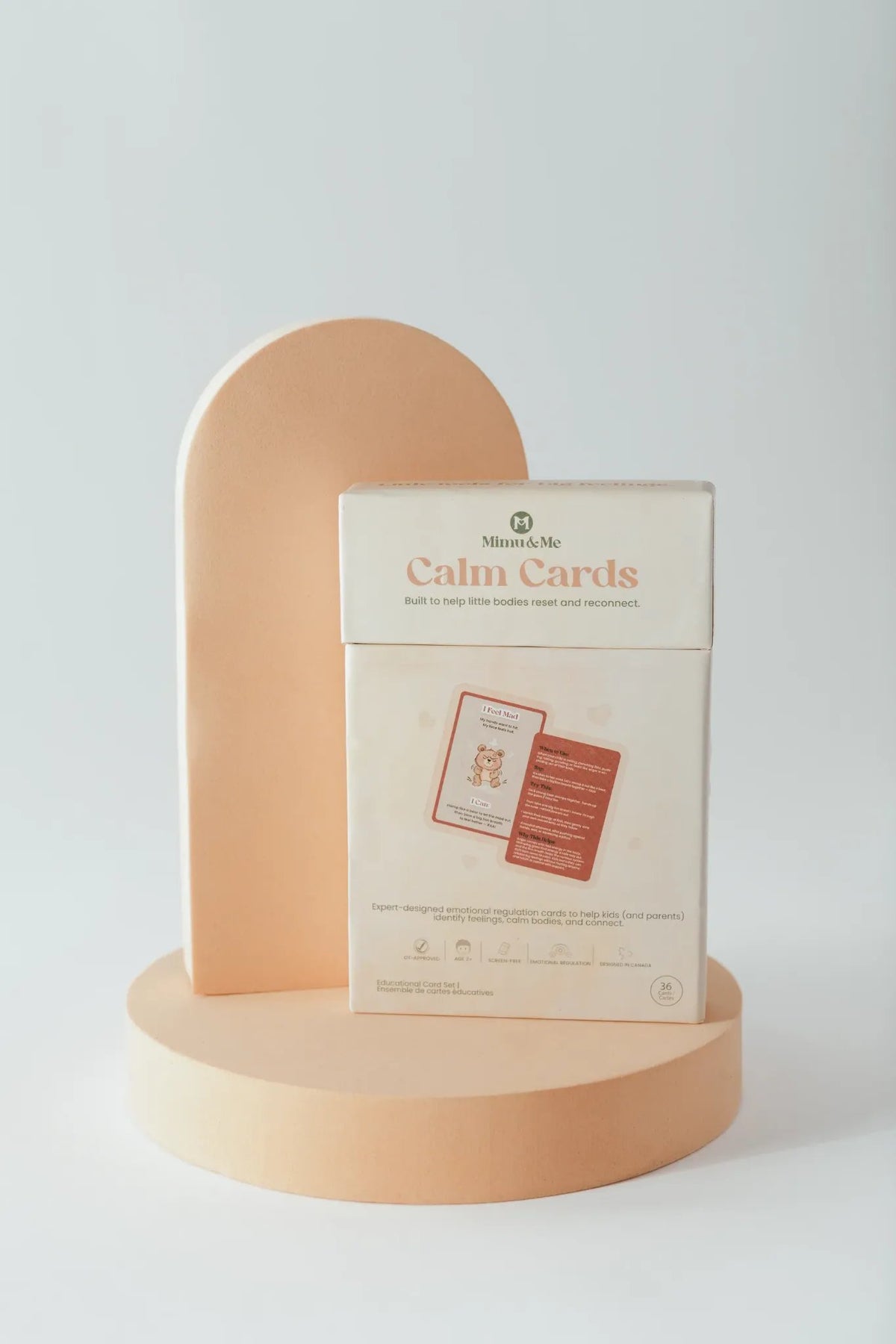
36 DOUBLE-SIDED EMOTIONAL REGULATION CARDS · AGES 3–7
Words for Their Feelings. Words for You, Too.
When your child has a big feeling and your mind goes blank, reach for a card that supports you both. Child-friendly pictures, feeling words and playful ideas on the front; practical scripts, extra guidance and the “why” behind each idea on the back.
- 12 Feeling Cards
- 12 Sticky Situations
- 12 Regulation Games & Activities
- Grown-up guidance on every card
He ran and grabbed his Calm Cards again and said, ‘I’m feeling frustrated!’ These are really great cards.
Regular price
$44.99
Sale price
Regular price
$44.99
Shipping calculated at checkout.
Quantity
Couldn't load pickup availability
Product Details
36 double-sided cards in a sturdy slide-out box. Each card has a child-facing side and a practical grown-up side.
12 Feeling Cards
- 12 common feelings, with expressive Calm Crew illustrations children can recognize
- Words for the emotion and child-friendly body clues to help notice how it feels
- A concrete strategy or playful idea to explore together
- Grown-up prompts on the reverse: when to use it, what to say, other ideas to try and why it may help
12 Regulation Games & Activities
- 12 playful activities that can be used across different situations, not just when feelings are big
- Movement, breathing, grounding, sensory, mindfulness and connection ideas
- Try them at home, on a road trip, during a flight or together with siblings
- Parent-facing guidance explains how to join in and why the activities may be useful
12 Sticky Situation Cards
- 12 relatable moments when little kids and grown-ups can feel stuck
- Examples include waiting, leaving the park, sitting too long, loud places and sleeping somewhere new
- Child-friendly visuals and something practical to try, with words and ideas for grown-ups on the back
Age & Supervision
Calm Cards are designed for children ages 3–7 with grown-up support. Some children may start choosing favourite cards independently as the pictures and strategies become familiar, but the back is designed to support adults too.

PAIR & SAVE $14.98
The Big Feelings Set
Calm Cards + Calm Crew Puzzle
Help feelings language become familiar through hands-on play.
$75.00
$89.98See the set →


SEE BOTH SIDES
One Side for Your Child. One Side for You
Tap any sample to turn it over. The front gives your child a picture, words and an activity to try. The back helps you know when to use it, what to say and why it might help.
REGULATION GAME & ACTIVITY
Play a Regulation Game
STICKY SITUATION CARD
Navigate a Sticky Moment
PLAYFUL SUPPORT FOR BOTH OF YOU
What’s on Each Card?
On the front, your child can see a feeling, situation or activity and something to try. Turn it over for words you can say, extra ideas and the thinking behind them—so you have a starting point when your mind goes blank.

HOW FAMILIES USE THEM
Practice Before. Support During. Reconnect After
Get to know the cards during calm moments, keep them close for tricky ones, and return to them when everyone is ready to talk.

Practice When They’re Calm
Explore a feeling or play an activity together when there’s no rush. Try the words and movements so they become familiar before a difficult moment.

Reach for Something Familiar
Offer a card that fits the moment and try one idea together. Use the parent prompts when words are hard to find; your child may need connection or space before an activity.

Reconnect and Repair
When everyone is ready, revisit what happened. Name the feeling, talk about what helped and practice what you could try next time—including making things right with each other.

BEHIND THE DESIGN
Why I Designed This
I read the parenting books. I understood what I was supposed to do. But when my own kids were overwhelmed or frustrated, my mind went blank. I needed the words and strategies just as much as they did. A conversation with my friend, child psychologist Monica Crane, reminded me that parents need support in those moments, too.
Working with pediatric occupational therapist Dr. Calli Studebaker, we built 36 cards around 12 feelings, 12 sticky situations and 12 playful regulation games. With expressive Calm Crew illustrations, the child-facing side helps little ones recognize feelings and discover something to try. On the back, I wanted the guidance I wished I'd had: when to use it, what to say, more ideas and a simple explanation of why it may help. These cards are for both of us.
Brittany · Founder of Mimu & Me
Good to Know
Questions Parents Ask About Calm Cards
Everything you need to know about what's on each side, how to play with the cards and what to do when the words are hard to find.
What ages are Calm Cards best for?
Calm Cards are designed for children ages 3–7 with grown-up support. Some children may start choosing favourite cards independently as the pictures and strategies become familiar, but the back is designed to support adults too.
What exactly is in the Calm Cards deck?
You'll get 36 double-sided cards in a sturdy slide-out box: 12 Feeling Cards, 12 Sticky Situation Cards and 12 Regulation Games & Activities. Every card has a child-facing side and a grown-up side.
Can I use a card when my child is already overwhelmed?
You can offer a familiar picture, a short phrase or one simple activity without pressure. A child who is very upset may not be ready to read, talk or try a strategy right away; focus on connection and safety first. Practicing a few cards during easier moments can help make them familiar later.
Do we need to practice the cards before big feelings happen?
It's a lovely way to start. Read a Feeling Card, try a movement or breathing game, or talk through a Sticky Situation when everyone is comfortable. The regulation games are also simply fun things to do together, not only during difficult moments.
Are Calm Cards just for travel or challenging moments?
No. Families use them for conversations at home, sibling connection, bedtime, waiting, restaurant visits, transitions and family trips. The games can be played for fun on an ordinary day, even when nobody is upset.
What's on the grown-up side of each card?
The back helps with four practical questions: when could I use this, what could I say, what else could we try, and why might this help? The explanations draw on child-development principles and were shaped with Dr. Calli Studebaker, a pediatric occupational therapist. They aren't a guarantee that every strategy will work for every child.
Are Calm Cards therapy cards?
Calm Cards are playful, educational supports for everyday family life, not therapy or medical treatment. They can help families explore language and activities together but are not a replacement for individualized professional guidance.
Can my child use Calm Cards independently?
Children may begin choosing a familiar picture or game on their own, but the deck is meant to support connection with a grown-up. You can read the prompts, model the activity and adjust the language to your child's age and needs.
How are Calm Cards different from ordinary emotion flashcards?
Only 12 of the 36 cards focus on specific feelings. Another 12 cover Sticky Situations like waiting, leaving or loud spaces, and 12 offer regulation games and activities. Feeling Cards also connect a feeling to body clues and an action; every card includes words, extra ideas and a short 'why it may help' explanation for grown-ups.
A Little Help for Both of You
36 double-sided cards with feeling words, everyday situations, playful games and practical prompts for parents.
PLAY AND CONNECT
More Ways to Explore Feelings Together
Calm Cards stand beautifully on their own. Pair them with hands-on Calm Crew play or choose a favourite for busy hands and family adventures.
PAIR & SAVE
Big Feelings Set
Calm Cards and the Calm Crew Puzzle together: words and playful ideas for feelings, plus fishing, threading, stories and strategy symbols. Save by buying them together.

FIVE WAYS TO PLAY
Calm Crew 5-in-1 Wooden Puzzle
Meet the characters through a wooden puzzle, magnetic fishing, threading and storytelling. Engraved symbols offer strategy reminders to explore.

FOR NEW ADVENTURES
Calm & Confident Travel Bag
A convertible travel activity bag with visual routines and a play space for familiar favourites on the go.